


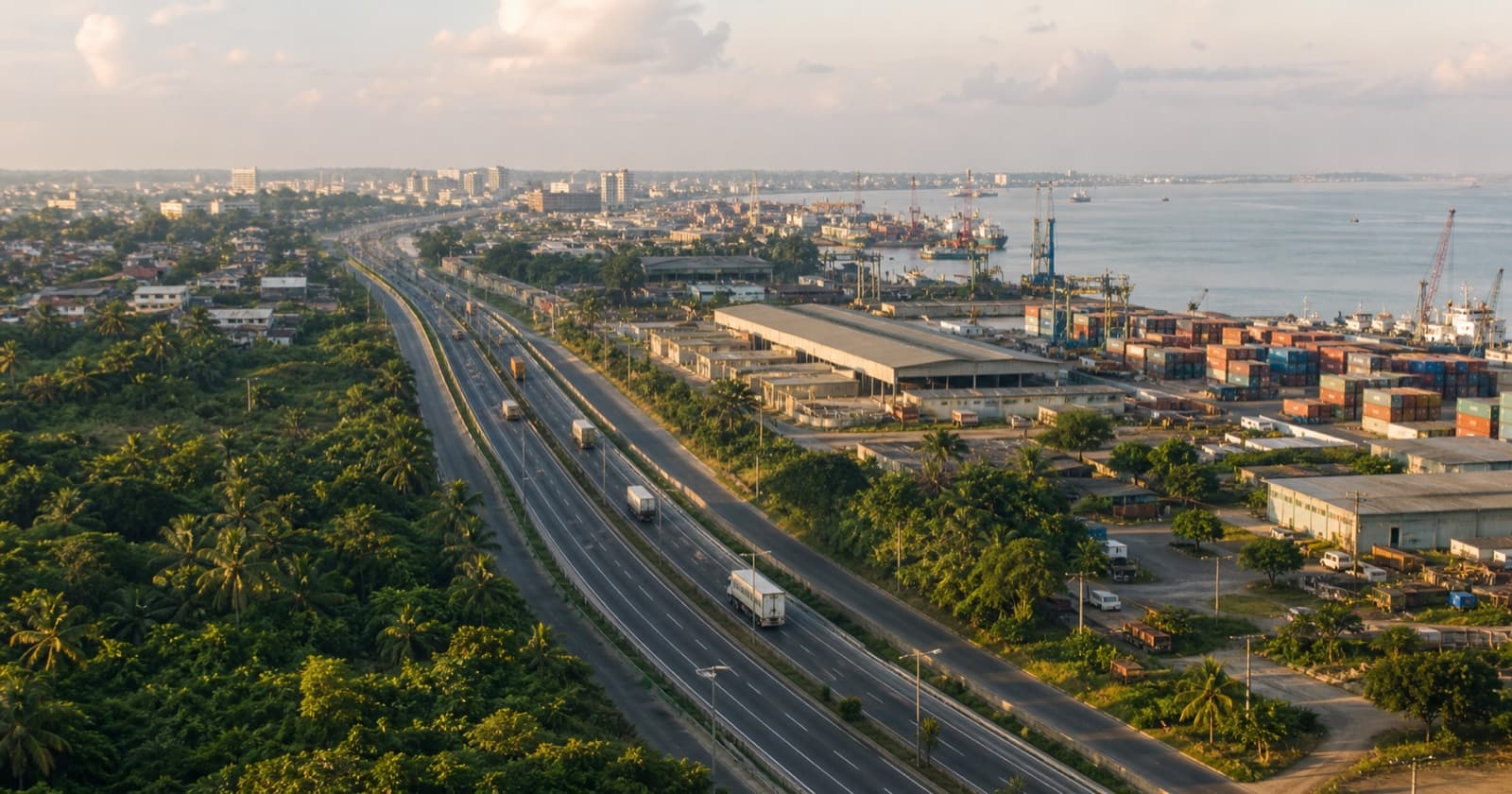
The Abidjan–Lagos Corridor: 5 Construction Opportunities to Watch
The opportunity is bigger than a highway. Here are five areas construction suppliers should follow—and the signals that separate real projects from headlines.
By Sarakim Trade
The Abidjan–Lagos project is usually discussed as a highway. The more interesting opportunity may be everything built around it: warehouses, industrial sites, border facilities, offices, hotels, and distribution centres.
The proposed 1,028-kilometre corridor would connect Abidjan, Accra, Lomé, Cotonou and Lagos. ECOWAS reported in May 2026 that its economic and technical studies were complete and that the project had moved into the investment stage. The corridor authority began its operational phase the following month.
That does not mean every contract is funded or ready to buy. It means suppliers should start watching the right opportunities now.
The 30-second takeaway
- Follow buildings and industrial facilities around the corridor—not only road materials.
- Focus on specialised systems that are difficult to source locally.
- Prepare French and English technical documents before tenders appear.
- Track financing, designers and contractors—not press announcements alone.
- Treat each of the five countries as a separate import and distribution market.
1. Warehouses and logistics centres
Better connections between five ports and major commercial cities can make storage and distribution sites more attractive.
For suppliers, relevant packages may include:
- Roofing, cladding and thermal insulation
- Industrial floors and loading-area finishes
- Drywall, ceilings and office fit-out
- Joint sealants, repair mortars and protective coatings
These are generally a stronger import opportunity than aggregates or basic cement, where local producers have a major freight advantage.
2. Industrial and manufacturing facilities
ECOWAS describes industrial areas, manufacturing zones and logistics hubs as part of the wider corridor vision.
Industrial projects buy on performance. They may require non-shrink grouts, chemical-resistant finishes, fire-rated partitions, insulation, waterproofing or complete wall and ceiling systems. The winning offer is rarely just the cheapest unit price; it is the offer that matches the specification and arrives with the correct evidence.
3. Border and service infrastructure
A trade corridor also needs customs facilities, offices, sanitary blocks, inspection areas, truck stops and maintenance buildings.
Those projects can create demand for practical, repeatable packages:
| Building area | Likely requirements |
|---|---|
| Offices | Drywall, acoustic insulation, ceilings, doors |
| Sanitary areas | Waterproofing, tiles, bathware, plumbing products |
| Exterior areas | Durable finishes, sealants, concrete repair |
| Utility rooms | Fire-rated systems, coatings, compatible fixings |
4. Commercial development around logistics nodes
Hotels, retail, restaurants and offices tend to follow busy transport and industrial locations. These buildings can use higher-value finishing packages: ceramic surfaces, sanitaryware, acoustic partitions, suspended ceilings and wet-area systems.
The five markets will not move at the same speed. Côte d’Ivoire offers a strong combination of port, urban and industrial demand. Ghana has an established local supply base. Togo’s advantage is Lomé’s transit role. Benin connects Togo and Nigeria. Lagos provides scale, but also greater competition and operational complexity.
Explore our market guides for Côte d’Ivoire, Ghana and Togo.
5. Coastal protection and maintenance
Much of the corridor runs through humid coastal conditions. Warehouses, ports, offices and concrete structures may need waterproofing, corrosion protection, joint treatment and repair systems throughout their service life.
This is not only a new-construction market. Maintenance and refurbishment can generate smaller, more immediate opportunities than a megaproject with a long financing timetable.
How to tell if an opportunity is real
Do not mistake a headline for an order. Look for these signals:
- A named financing approval
- An identifiable implementing agency
- Appointment of designers or supervising consultants
- A prequalification or tender notice
- A bill of quantities or performance specification
- A credible contractor, payment route and delivery site
Suppliers who wait for the final request may miss the approval stage. Suppliers who react to every announcement waste time. The useful window begins when the project team and procurement route become identifiable.
What suppliers should prepare now
Create a compact project-submittal pack containing:
- Current datasheets and test reports
- Complete system components and accessories
- French and English product descriptions
- Country of origin and manufacturer details
- Packing dimensions and container quantities
- Shelf-life and storage requirements
- Installation guidance and proposed equivalents
The African Development Fund’s June 2026 update confirms that the corridor’s governance is taking shape. Financing and procurement will still develop package by package.
Sarakim helps contractors and distributors compare compliant systems, consolidate compatible materials and coordinate export packing for a named destination. Send us the country, project stage, bill of quantities and required standards for a practical sourcing review.
Project status checked on 5 August 2026. Always confirm current financing and procurement through the authorised project documents.
Planning a construction materials shipment?
Share your bill of quantities, destination, and timeline. We’ll help you clarify the sourcing and logistics options.
Request a Quote